AI Writes Code. Engineers Build Systems. Businesses Buy Outcomes.
AI can generate interfaces in minutes. But shipping production-ready software requires much more than generated code. It requires architecture, security, maintainability, and sound engineering judgment. We put this to the test while building the landing page for our own product.
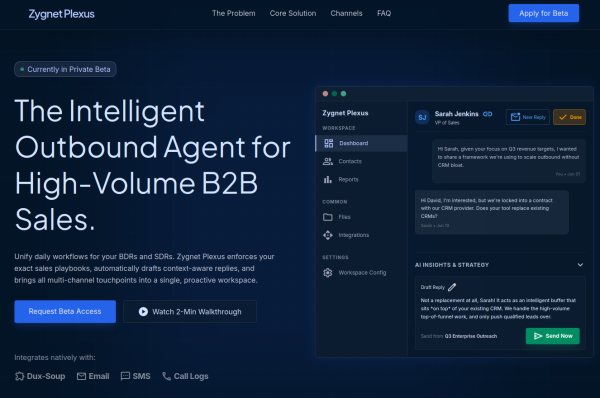
We have been building Zygnet Plexus, a B2B sales outreach platform, and needed a landing page for our private beta launch. Rather than following a traditional development process, we used it as a test case to answer a question many businesses are asking: how far can AI take you, and where does engineering expertise still make the difference?
Step 1: Giving AI Business Context
We knew we couldn't just open a prompt window and ask an AI to "build a website." We started by anchoring the AI to our core commercial strategy. We fed our complete GTM brief directly into Stitch, Google’s platform for generating website designs.
The prompt didn't just ask for layouts; it included our positioning, target buyer pain points, and value proposition. Because the AI understood why we were building the page and whom it was for, the visual assets it generated actually mapped to our business logic.
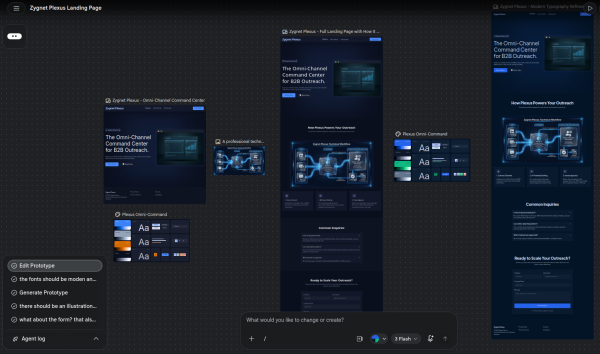
After three focused iterations of tweaking layout hierarchies and positioning typography, we had exactly the premium, dark-mode command center foundation we were looking for.
With the visual direction finalized, we turned to implementation. We asked our AI coding agent to translate the approved design into an Astro-based landing page that aligned with our engineering standards.
Step 2: Architecting the Technical Brief
Next came the technical architecture. It is easy to let an AI blindly select your tech stack, but as technology strategy partners, we maintain strict engineering control. We needed a flexible, highly lightweight system where frequent design changes weren't the primary constraint. What mattered most was a system capable of executing flawless performance, seamless lead capture, and robust tracking.
We selected Astro because it compiles to pure, zero-JavaScript HTML, guaranteeing the sub-second load times required to capture high-intent traffic. Astro gave us a clean, scalable workflow: we update our copy directly in our self-hosted GitLab editor (or via Antigravity, our AI coding agent), and the pipeline automatically triggers a static build that goes live in the blink of an eye.
This is where the difference between generated code and engineered software became apparent. Like most first-draft AI-generated implementations, the initial output optimized for producing working code, not for long-term maintainability.
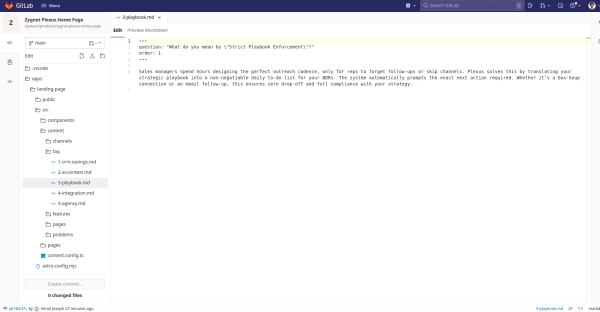
AI agents cannot infer architectural intent unless you explicitly provide it. As engineers, our next question was : how do we create the next landing page without duplicating code? Does Astro support themes? We asked the coding agent that. Using its MCP (Model Context Protocol) integration, it looked up the official Astro documentation and guided us through refactoring the project.
It helped us architect a reusable Astro theme package (`@zygnet/theme`) alongside Astro Content Collections to isolate our features, pain points, and FAQs into strictly typed Markdown files. We achieved a clean separation between content and presentation. Now, when we want to spin up a new landing page, we know exactly how to do it in minutes.
Step 3: The Security Check
Just as we thought we were ready to deploy, we hit a critical structural roadblock. Our lead capture form was designed to route payloads straight to our automation engine. The AI's initial implementation exposed our backend webhook URL directly in the client-side HTML source code. This would create a serious security and compliance risk.
True engineering value lies in proactive risk mitigation. We consulted the LLM tools on the vulnerability and deployed a serverless edge defense layer: a Cloudflare Worker paired with Cloudflare Turnstile.
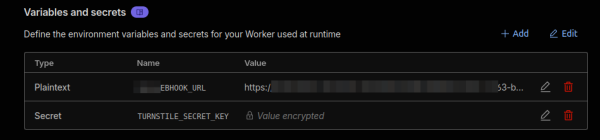
We securely stored our private API keys inside the Cloudflare environment, hidden from the browser. Now, when a prospect submits a request to join the private beta, the browser only talks to the edge network. The Worker processes the form, Turnstile validates the visitor without intrusive puzzles, and the payload is passed server-to-server. The public code contains zero secrets and bot traffic is filtered before it ever gets the backend.
Step 4: Automating the Lead Pipeline
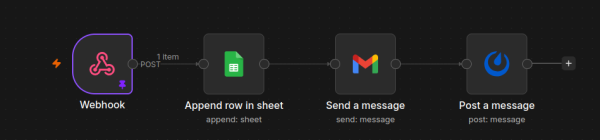
With the submission path secured, the next challenge was turning verified requests into actionable sales opportunities. We routed the sanitized JSON payload into a self-hosted instance of n8n. We chose this approach because it made it incredibly simple to glue our systems together. The moment a new lead is captured, n8n triggers an automated workflow that logs the entry into a Google Sheet, sends a confirmation email to the relevant team members, and pushes a real-time notification to our internal communication tool, Mattermost. This setup doesn't just ensure data privacy; it turns a simple form submission into an actionable sales event, allowing our team to follow up in minutes.
What We Learned: Prototype Code vs. Engineered Systems
This experiment drew a clear line between what AI accelerated and what still required engineering judgment:
| Where AI Accelerated Delivery | Where Engineering Judgment Added Value |
| Generated the initial UI layouts in minutes | Defined the overarching architecture and stack constraints |
| Built the core Astro project directory | Instructed the AI assistant to refactor into a sustainable Markdown architecture and reusable theme |
| Implemented responsive Tailwind CSS components | Reviewed the code, secured the workflow and obfuscated private webhooks |
| Accelerated localized iteration speed | Validated every technical decision against business ROI |
Prototype AI code gives immediate visual gratification, but it's brittle, lacks context, and introduces security gaps. Engineering judgment is what turns it into a system that anticipates data privacy risks, scales with the organization, and reflects real business strategy.
The Takeaway
We compressed a traditional multi-disciplinary agency build, typically spanning 40 to 60 hours across design, development, and QA, into a single, controlled 10 to 12-hour sprint, accounting for design iteration, security remediation, and pipeline setup. AI didn't eliminate the engineer; it amplified the architect.
AI replaces repetitive typing, not technical strategy. The competitive advantage isn't how fast you can generate syntax; it's how well you translate business outcomes into systems that are secure, maintainable, and production-ready.